
Frequently asked questions about fertility and assisted reproduction (XVIII)
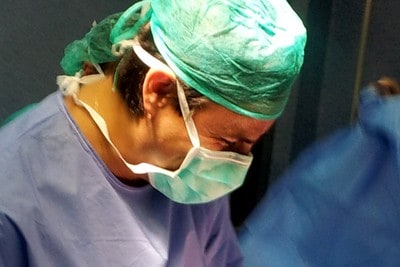
Once again, we’re bringing you a summary of our participation in the live chat hosted by La Opinión de Málaga. This virtual Q&A allows us to answer questions about fertility and assisted reproduction that future parents frequently ask. The chat is part of the newspaper’s “Ask a Specialist” section, and all questions are answered by Dr. Claudio Álvarez, Medical Director of URE Centro Gutenberg.
As in previous editions, many questions about fertility and assisted reproduction focused on COVID-19—understandably, since the pandemic continues to cause uncertainty. Here are the most frequently asked questions and answers from Dr. Álvarez.
Can antibodies be passed to the baby through breast milk after COVID-19?
Some studies have shown that a mother can pass antibodies to her baby through breast milk after recovering from COVID-19. However, it’s still unclear whether this provides actual protection to the infant.
I’ve had multiple miscarriages. What should I do?
Two or more clinical miscarriages are considered recurrent pregnancy loss. A full evaluation of both partners is recommended. The sooner you consult a fertility specialist, the better.
If I have COVID-19 during fertility treatment, will my chances of pregnancy be lower?
If a patient has COVID-19, treatment should be postponed until they are medically cleared. This is mainly to protect the patient’s health, not because the virus reduces success rates in assisted reproduction.
I’m 50, have undergone chemo and radiotherapy. Can I become a mother through ART?
In Spain, fertility clinics do not perform assisted reproduction treatments for women over 50, as pregnancy at that age poses significant health risks.
Is natural pregnancy possible during perimenopause?
While technically possible until menopause occurs, chances are very low during perimenopause.
Can I start fertility treatment right after recovering from COVID-19?
It’s best to undergo fertility treatment in optimal health conditions. Once you’re medically cleared, treatment can be safely planned.
Can COVID-19 leave me infertile?
While a few cases of gonadal impact have been reported, there’s no strong evidence that COVID-19 causes long-term infertility in men or women. Research is ongoing.
Can you get pregnant if your partner has a 47, XYY chromosome pattern?
Some men with 47, XYY syndrome may be fertile, depending on the degree of impact. A semen analysis and specialist consultation are essential.
I’m 35 and obese. What matters more for fertility treatment: age or weight?
At 35, fertility outlook is still good, but time is important. Obesity, however, is linked to lower success rates and higher risks. Both factors matter.
At what age should egg freezing be considered?
The ideal age to preserve fertility by freezing eggs is before 35–37 years old.
In egg donation at URE Centro Gutenberg, are all donated eggs given to one recipient?
Yes, in general, egg donation is exclusive to one recipient, and we guarantee a minimum of 8 oocytes per donation.
Is 37% sperm DNA fragmentation a serious issue?
Yes, a 37% fragmentation level is considered high and may reduce success rates in both natural and assisted reproduction.
How reliable are non-invasive prenatal testing (NIPT) and newborn screening?
NIPT detects the most common fetal chromosomal anomalies with over 95% accuracy from the 10th week of pregnancy, using a maternal blood sample.
When is it safe to try for a new pregnancy after an 8-week miscarriage?
Once your menstrual cycle returns, you can try again. However, waiting for two to three cycles may be emotionally and physically beneficial.
Final Thoughts
Thank you to everyone who submitted questions about fertility and assisted reproduction in this 18th edition of our Q&A series. You can access all previous editions from our website.
Still have doubts? Don’t hesitate to reach out—our team at URE Centro Gutenberg is happy to help.