
Fertile Chip and PICSI: What are these assisted reproduction techniques?
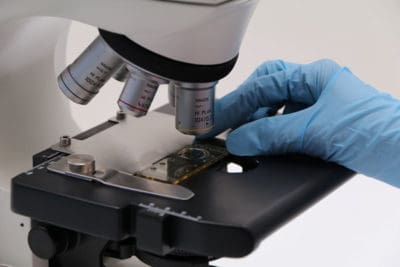
If you’re researching assisted reproduction treatments, you’ve likely heard of in vitro fertilization (IVF) or artificial insemination. But what about Fertile Chip and PICSI? Have you come across these techniques before? At URE Centro Gutenberg, we’d like to explain what they are and when they are used.
Fertile Chip and PICSI (Physiological ICSI) are two innovative techniques in IVF that we have recently incorporated into our fertility clinic. Both share the same goal: selecting the best quality sperm before performing intracytoplasmic sperm injection (ICSI).
These advanced reproductive techniques are especially recommended in cases of semen samples with high sperm DNA fragmentation. This condition can lead to fertilization failure, implantation failure, or even miscarriage if pregnancy occurs. That’s why we turn to Fertile Chip and PICSI to increase the chances of success.
How Are Fertile Chip and PICSI Different from Traditional ICSI?
The key difference between Fertile Chip and PICSI and traditional sperm selection methods lies in how the sperm is chosen.
In conventional ICSI, the embryologist manually selects sperm based on morphology and motility—two key indicators of fertilizing potential.
However, with Fertile Chip and PICSI, we use a more objective approach. These techniques reduce the chances of selecting sperm with chromosomal abnormalities, which helps improve the success rate of assisted reproduction treatments.
What Is Fertile Chip and How Does It Work?
The Fertile Chip is a microfluidic device with two chambers connected by a small channel. A fresh semen sample is placed into the input well and left to incubate for around 30 minutes. During this time, the most motile and morphologically normal sperm migrate through the channel into the second chamber.
This method allows us to collect higher-quality sperm for use in ICSI—without the need for conventional sperm processing or centrifugation.
Fertile Chip is particularly recommended for semen samples with double-strand DNA fragmentation, which is often associated with repeated failures in assisted reproduction or recurrent miscarriage.
What Is PICSI (Sperm Low) and How Does It Work?
PICSI, also known as physiological ICSI or Sperm Low, involves placing a processed semen sample onto a plate containing synthetic hyaluronic acid droplets. High-quality sperm naturally bind to these droplets, making it easier for the embryologist to select them.
Unlike Fertile Chip, PICSI uses a processed semen sample, meaning the sperm has undergone prior preparation or REM (motile sperm recovery).
PICSI is especially useful when dealing with single-strand DNA fragmentation, another factor that can contribute to failures in reproductive treatments.
Fertile Chip or PICSI: Which One Should You Use?
Choosing between Fertile Chip and PICSI depends on the individual characteristics of the semen sample. To determine the most suitable option, our specialists conduct a detailed DNA fragmentation test beforehand.
The decision is always made by our trained medical and biological staff, ensuring a personalized approach for every patient.
Still have questions about Fertile Chip and PICSI? Don’t hesitate to reach out to our team—we’ll be happy to help you understand these advanced IVF techniques and their potential benefits.