
Breast cancer and fertility
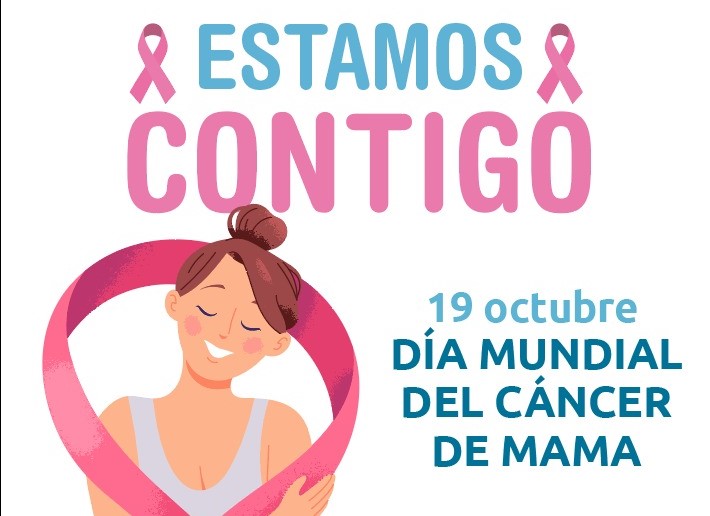
Every 19 October, World Breast Cancer Day is celebrated as a reminder of society’s commitment to the fight against cancer and to raising awareness of early detection of this disease.
Breast cancer is the most common malignant tumour among women. According to the World Health Organisation, every 30 seconds a case of breast cancer is detected somewhere in the world, and 1 in 8 women will develop it at some point in their lives.
In Spain, around 25,000 new cases are diagnosed each year. Of these, between 20 and 30% occur in women who wish to become mothers. That is, in women of reproductive age.
Thanks to scientific advances in this field, around 85% of diagnosed cases can be cured. But there’s more… early detection would mean a 100% cure rate, even avoiding chemotherapy after surgery.
According to data from the Spanish Society of Clinical Oncology, seven out of ten patients with a common type of early-stage breast cancer do not need chemotherapy after surgery. This would spare thousands of women from its side effects, including infertility. Another important piece of information, presented by this association at its last meeting, was that women who become pregnant after overcoming breast cancer are not at greater risk of relapse.
The importance of breast examination in early detection
Working to raise awareness about early detection of this disease is essential. Detecting cancer early increases the chances of survival and preserves a woman’s fertility by avoiding chemotherapy.
That is why, at URE Centro Gutenberg, we would also like to take this opportunity to share some essential prevention advice for the early detection of breast cancer. We are referring to breast examination.
All women over the age of 20 should perform a breast self-examination at least once a month. After the age of 25, it is recommended that this examination be performed by a specialist during your annual gynaecological check-up. And, from the age of 40 onwards, it is advisable to supplement this with a mammogram.
Breast self-examination should always be performed in front of a mirror. It is best to do it on the same day of the month, preferably after your period, paying attention to any changes in the colour and texture of your breasts (asymmetrical abnormalities, inverted nipples, increased number of veins, skin changes, etc.).
The observation is completed by palpation to rule out the presence of any lumps. The lump can vary in size from a lentil to a hazelnut and does not necessarily have to be painful. The latter is very important, as many women think that pain is an initial symptom, when this is not the case.
Is there a predisposition to breast cancer?
Most cases of breast cancer are sporadic. That is, they develop from damage to a person’s cells that occurs after birth. Cases of hereditary breast cancer are less common, accounting for between 5 and 10% of cancer cases.
External factors such as a sedentary lifestyle, high consumption of fats and sugars, tobacco or alcohol, late pregnancy or no pregnancy, early menopause, not breastfeeding, first period before the age of 12, etc. can contribute to the development of this disease.
Chemotherapy and fertility
In cases where treatment with chemotherapy and drugs is necessary, and the woman is of childbearing age, she should be offered the opportunity to preserve her fertility before starting treatment. At least, whenever possible.
Some time ago, we discussed life after cancer on the blog, explaining how medication affects a woman’s ovarian function and what methods exist to preserve fertility, whether through egg vitrification, embryo freezing, or ovarian cortex.
Other alternatives available at assisted reproduction centres, if fertility preservation is not possible and spontaneous pregnancy does not occur, would be egg donation and/or embryo adoption.
Free fertility preservation plan for cancer patients
At URE Centro Gutenberg, we provide all the necessary advice to women and men who consult us about fertility preservation. We have a specialised unit that will advise you with all the empathy and emotional support you need at this time. In addition, this service is completely free for patients diagnosed with cancer who are of childbearing age.
If you have questions about how breast cancer affects your fertility, or if you have gone through this disease and want to become a mother, we can help you. You can contact us here.