
Follicle development in ovarian stimulation: what you need to know
Many patients who come to URE Centro Gutenberg are often confused by some concepts related to assisted reproduction. One example is follicle and oocyte. These are familiar terms, but they are not the same. However, oocyte is the same as egg.
Something similar happens with other concepts related to pregnancy and fertility treatments, such as those we perform at our assisted reproduction clinic. Therefore, in this article, we want to focus on explaining what follicles are and their role in ovarian stimulation.
What is a follicle?
Every woman is born with a certain number of oocytes in her ovaries. The immature oocyte is a cell surrounded by a layer of smaller cells, called follicular cells. When the egg begins its development and maturation, these follicular cells begin to produce a fluid that gives rise to the follicle. This is what is seen on an ultrasound, as dark circles inside the ovary.
With each woman’s menstrual cycle, a variable number of oocytes within her follicle begin maturation. Of all the developing follicles, hormonal changes select one, called the “dominant follicle,” which carries the oocyte that will be ovulated that month. The remaining follicles atrophy.
This process, known as ovulation, is repeated month after month, cycle after cycle.
What are follicles in the ovaries?
Normally, a woman develops and matures one egg per month, but rarely, two. In most cases, assisted reproduction treatment with an oocyte is ineffective, especially in vitro fertilization.
For this reason, controlled ovarian stimulation is performed. To achieve this, we use hormones that allow us to generate “superovulation,” that is, develop more than one or two eggs, ideally between ten and fifteen eggs in total.
This process allows us to improve the chances of success of the assisted reproduction treatment, as it gives us a greater chance of obtaining high-quality embryos to transfer to the woman’s uterus.
What is the ovarian stimulation process like?
Ovarian stimulation generally begins on the second or third day of menstruation, with hormonal medication administered for approximately ten to fourteen days.
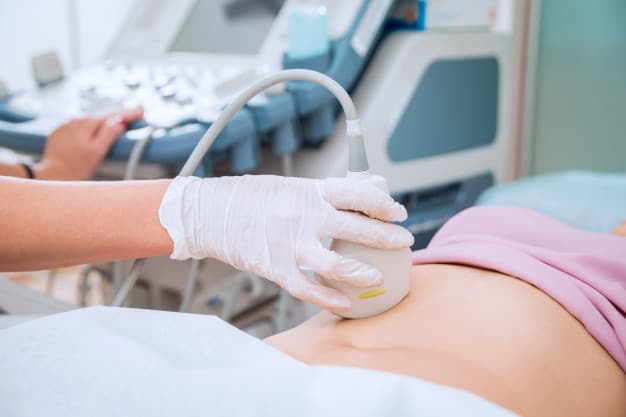
During this period, the doctor will monitor the proper development of the follicles with ultrasounds and blood hormone levels. The type of medication, the method of administration, and the dosage depend on each woman’s diagnosis.
When the majority of follicles exceed 18 millimeters in average diameter, the hCG hormone is injected to produce the final maturation of the follicles and/or oocytes. After 36 hours, ovarian puncture is scheduled. This involves aspirating the follicular fluid from each developed follicle containing the oocyte.
In the laboratory, the embryologist will evaluate the number of oocytes retrieved and their maturity. It is not always possible to retrieve the oocyte from the follicle, and not all oocytes may be mature. In fact, in a very low percentage (less than 5%), no oocytes may be retrieved at all. This is known as empty follicle syndrome, the cause of which is very difficult to determine.
Does ovarian stimulation have risks?
Like any medical procedure, ovarian stimulation has risks, but these are very rare.
The most common is ovarian hyperstimulation syndrome, which can be severe. This consists of an exaggerated ovarian response to stimulation, with varying discomfort for each patient. However, today there are measures to almost 100% prevent its occurrence, or at least to lessen its severity.
We hope we’ve answered all your questions. We’re always here to help at URE Centro Gutenberg. If you still have any questions, just make an appointment with us, and we’ll help you resolve them.