
Frequently asked questions about fertility and assisted reproduction (I)
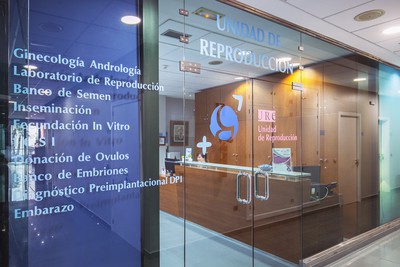
The Gutenberg Center’s Reproduction Unit, specifically Dr. Claudio Álvarez, has participated numerous times in the online chat section of the Málaga newspaper La Opinión, in a section called “Ask a Specialist.” As you can imagine, we’ve collected many questions about fertility and assisted reproduction over time, so we’ve decided to share them with you on our blog.
To do so, we’re going to divide the questions into several parts: in this blog, we’ll focus specifically on the questions couples often have when facing fertility and assisted reproduction problems; and later, we’ll focus on questions patients ask once they’ve begun assisted reproduction treatment.
In this article, we’ll list the questions we believe are most relevant, as well as those most frequently asked by readers. Let’s get started!
My anti-Müllerian hormone level is very low. Is there anything I can do to raise it?
No, since this test only reflects the ovarian status in relation to the oocyte reserve, and this reserve cannot be improved.
What you can do is undergo fertility and assisted reproduction treatment (such as in vitro fertilization, for example) to improve your chances of achieving pregnancy.
What are the most fertile days for sexual intercourse?
Due to the characteristics of cervical mucus, which changes depending on the production of certain hormones during the menstrual cycle, the most effective sexual intercourse occurs before ovulation.
After ovulation, cervical mucus becomes thicker and denser, making it difficult for sperm to ascend. Here’s a little more information on how to calculate your fertile days for becoming a mother.
During IVF stimulation, are all medications equally effective?
In general, all the hormones we monitor in an IVF cycle, and which stimulate the ovaries, are equally effective.
The use of one or the other will depend on each patient, their diagnosis, and the experience of each doctor. Here we provide more information about the purposes of hormonal medication in fertility and assisted reproduction treatments.
I have high TSH. Does this affect my ability to get pregnant?
TSH is the hormone that stimulates the thyroid gland, and is produced in the pituitary gland. Any imbalance in thyroid function can affect fertility and assisted reproduction outcomes and the normal progression of pregnancy. Therefore, it is essential that thyroid function is normal.
I am undergoing IVF. Can I get laser hair removal?
Yes, there are no contraindications to laser hair removal during fertility and assisted reproduction treatment.
During pregnancy, it may not be recommended, although there has been no proven deleterious effect on the fetus, due to the change in the rate of body hair growth during pregnancy.
I am a lesbian, and my partner will be a mother after insemination with a sperm bank. Do I have parental duties and rights toward the future child?
According to the current Same-Sex Marriage Law, if both women were legally married before the insemination, they are both automatically mothers with the same duties and rights.
However, if they are not married, or the marriage occurred after the insemination, a judicial procedure is necessary for both to have the same rights and responsibilities toward the child.
I have premature menopause. Can I ever become a mother?
Yes, and with a very good prognosis. Premature menopause means that the number of eggs has run out before the age of 40, so the only alternative to becoming a mother is in vitro fertilization with donated eggs, also called egg donation.
This treatment is the most effective among fertility and assisted reproduction treatments.
I’ve lost a lot of weight. Could this decrease my fertility?
Yes, sudden and excessive weight loss can affect fertility and assisted reproduction success by altering the production of hormones necessary for proper function of the male and female reproductive systems.
What is insulin resistance?
It is a metabolic disorder that patients with polycystic ovary syndrome can experience.
It needs to be studied and treated, which will improve the chances of pregnancy and long-term quality of life.
My testicles will be removed due to cancer. Will I be able to have children in the future?
Yes, male fertility can and should be preserved by freezing semen samples in a sperm bank. If this precaution is not taken, the only future alternative will be to use a sperm donor to achieve pregnancy.
Here we explain what a sperm bank is and how it works, so you can delve deeper into this topic.
Can I avoid genetic diseases with IVF?
Yes, but only certain serious genetic diseases: those known as monogenic, recessive, or dominant, that is, those caused by a single gene.
Those caused by several mutated genes (polygenic or multigenic) cannot yet be avoided through fertility and assisted reproduction.
You can contact us here.