
Fertilization failure: what might be the causes?
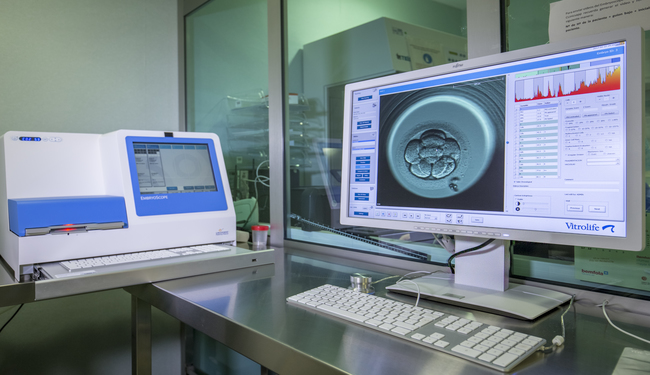
In vitro fertilization (IVF) is a fertility treatment that involves collecting mature eggs from the woman’s ovaries so that they can be fertilized with sperm in the laboratory.
This treatment is often recommended for couples who have not achieved pregnancy through artificial insemination, or in cases of unexplained infertility, blocked or damaged fallopian tubes, endometriosis, low sperm count or poor sperm motility, fertilization failure, ovulation or immune disorders, advanced maternal age, or when Preimplantation Genetic Testing (PGT) is required.
How Are Eggs Fertilized During IVF?
There are two main ways to inseminate eggs in the laboratory:
- Traditional IVF:
This technique consists of placing the prepared sperm sample in contact with the collected eggs. It’s typically used when there are no serious sperm issues — specifically, when the motile sperm concentration is between 1 and 3 million sperm/ml. - Intracytoplasmic Sperm Injection (ICSI):
In this method, a single sperm is directly injected into the cytoplasm of a mature egg.
ICSI is recommended when there are severe male factor problems such as low motility, poor morphology, or low concentration.
It’s also essential in cases where sperm is retrieved through testicular biopsy, when frozen sperm is used, or when vitrified eggs are being fertilized.
In recent years, many fertility clinics have opted to use ICSI routinely, even when semen parameters are normal, in order to maximise fertilization rates and reduce the risk of failure.
What Is Fertilization Failure?
The day after insemination — whether by IVF or ICSI — embryologists check how many eggs have been fertilized, also known as zygotes or pre-embryos.
Fertilization failure occurs when none of the eggs fertilize, or when the fertilization rate is unusually low.
This happens in approximately 11–15% of traditional IVF cycles and around 3% of ICSI cycles. Understandably, it’s an emotionally challenging outcome for couples who have undergone the demanding IVF process.
Before attempting another treatment cycle, it’s essential to conduct a comprehensive analysis of the couple’s case. Only by understanding the underlying cause can the medical team plan a strategy to reduce the chances of the same problem recurring.
Fertilization Failure or Poor Fertilization After Traditional IVF
When fertilization fails or is very low following traditional IVF, the recommended next step is to perform a new cycle using the ICSI technique.
Switching to ICSI typically improves fertilization rates significantly — though fertilization failure can still occur in around 3–4% of cases.
Studies have shown that patients who experience fertilization failure during conventional IVF cycles may also have lower implantation and pregnancy rates in future ICSI cycles.
This may suggest that the eggs or sperm themselves have underlying biological issues that affect embryo development.
That’s why it’s crucial to determine the cause of infertility before starting a new treatment cycle.
A normal sperm analysis doesn’t always mean the sperm is genetically healthy. Up to 27% of men with long-term infertility and repeated IVF failure have hidden chromosomal abnormalities.
In these cases, additional tests are recommended, such as:
- Sperm DNA fragmentation test
- Sperm FISH analysis (to detect chromosomal abnormalities)
- Meiotic studies on testicular tissue, which can reveal genetic issues that lead to poor embryo quality or fertilization failure.
Fertilization Failure After ICSI
When fertilization failure occurs after ICSI, the most common cause is severe male factor infertility.
If the sperm sample contains only immotile sperm, it’s advisable to request a second sample.
If the second sample shows the same results, a testicular biopsy should be considered to obtain viable sperm directly from the testes.
In cases of severe teratozoospermia (abnormal sperm shape), the link between sperm morphology and ICSI success is still debated.
However, when repeated fertilization failure occurs despite using ICSI, switching to donor sperm may be an appropriate option.
Fertilization Failure Due to Egg Quality
Sometimes the issue lies in the egg rather than the sperm.
Poor egg quality — often related to advanced maternal age, suboptimal ovarian stimulation, or a low number of retrieved eggs — can lead to fertilization failure.
In these situations, doctors may recommend:
- Repeating a cycle with traditional IVF, or
- As a last resort, considering egg donation.
Around 2% of IVF cycles show complete or near-complete fertilization failure even when both egg and sperm quality appear good.
In such cases, the suspected cause is oocyte activation failure — meaning the egg fails to start the fertilization process properly after the sperm enters.
Oocyte Activation Failure and New Techniques
Oocyte activation failure can result from multiple factors, including:
- Subtle morphological abnormalities in the eggs,
- Incomplete cytoplasmic maturation, or
- The egg’s inability to recognise or respond to the sperm.
Although the cause cannot always be identified or corrected, several laboratory techniques have been developed to help overcome this issue.
One promising approach is oocyte activation using calcium ionophore, a special medium that triggers the chemical reactions necessary for the egg to begin fertilization.
In some cases, this method has successfully improved fertilization rates compared with previous IVF attempts.
Final Thoughts
Experiencing fertilization failure after IVF can be heartbreaking. However, understanding why it happened is the key to moving forward confidently.
With advanced diagnostic tests, personalised treatment strategies and modern laboratory techniques, many couples go on to achieve success in later cycles.
Ready to Take the Next Step?
If you’ve experienced fertilization failure or repeated unsuccessful IVF attempts, our team at Fertility Clinic Spain will help you find the answers and the solutions you deserve.
Let us study your case in detail and design a personalised treatment plan that gives you the best possible chance of success.
Book your free initial consultation here — available online or in person in Málaga.